
Notes from Qigong Practice
3 insights from my Grandmaster

Last week at qigong was pretty eye-opening.
We started going deeper into the practice of cleansing the 12 meridians which involves coordinated movement, breath, vibration, and a surprising amount of visualisation. For many of us, the latter was the hardest part — which my grandmaster said requires both imagination and a kind of faith.
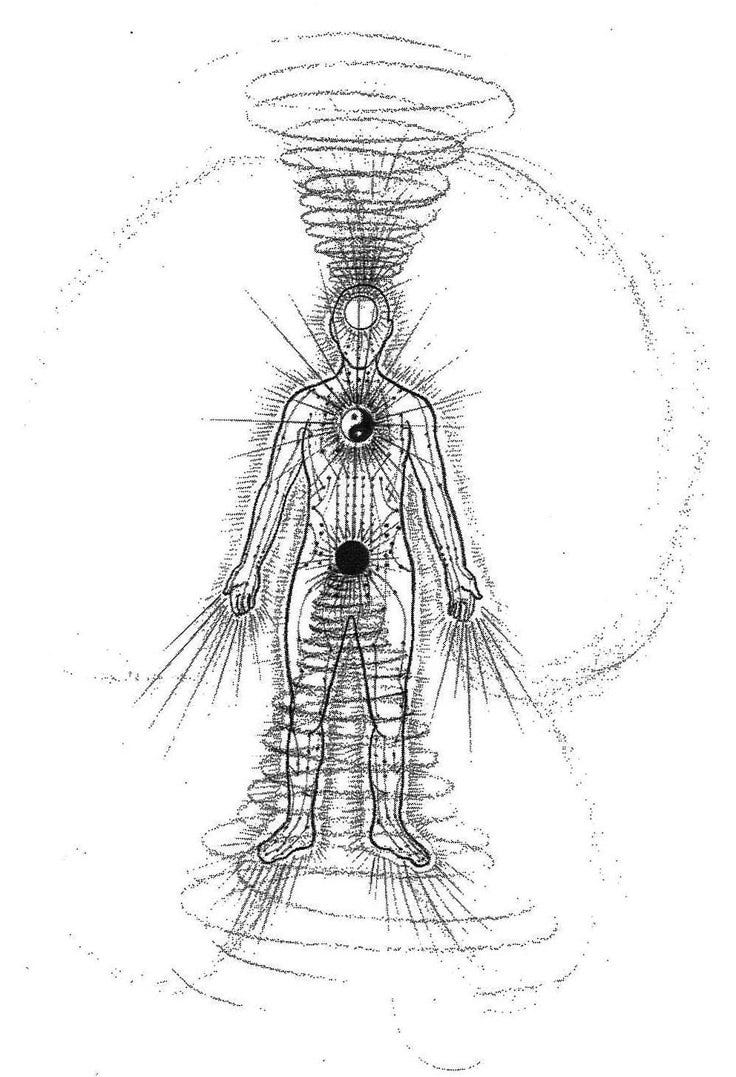
We need to believe it to see it, and see it to believe it.
To fully engage with the outcome of this practice, some of us need a bit of a push. The more “educated”, the more “scientific”, the more “arrogant” (I include my past self in this), the more we tend to require proof.
And so, our grandmaster organised some demonstrations. This one’s super funny.
And what made it even more interesting is that these demonstrations weren’t done by “masters.” They were done by everyday people who have just been practising consistently.
Anyway, here are three key insights I got from my grandmaster this week.
1. We’ve outsourced our relationship to the body
Modern healthcare, while incredibly effective in acute care, is largely reactive. In many ways, that reflects us — our culture. We want fast solutions, with minimal effort.
I see this even in my breath privates. The students who struggle the most are the ones who want immediate results without putting in the work. But I can’t breathe for them. They have to do it themselves, consistently, over time.
Then there are the students who put in the effort. They progress slowly, steadily, but the improvements are sustained. This is the thing with holistic practices: there is no shortcut.
But in this fast-paced culture, what do we do?
Pain → take an analgesic.
Fever → Panadol
Diarrhoea → loperamide
But have we actually thought about why these symptom are there in the first place?
Take a fever. The body is literally increasing its temperature as part of an immune response to kill pathogens. A cough or diarrhoea can also be part of the body’s process of clearing what it doesn’t want or cannot handle in that moment.
That’s literally the intelligence of the body, it knows how to heal itself. Why are we always trying to interrupt this process?
Of course, not all symptoms should be left alone. Some require intervention.
But not all discomfort needs to be immediately suppressed. Often, these signals are protective, or they’re pointing to something deeper. And if we’re constantly numbing these signals, we end up losing the ability to listen. We lose literacy in our own body; we lose interoception.
Over time, we become more disconnected from what’s actually going on internally; disembodied.
The goal isn’t to reject modern medicine. It’s to complement it with a more active, attentive relationship to our own physiology.
And if intervention is required, then in qigong they would say it’s about moving qi to support regulation and balance — a way of framing recovery, nourishment, and restoration.
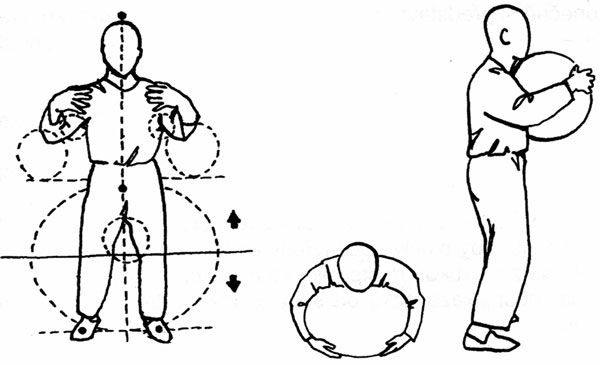
2. How to Feel Qi?
Qi, as it is described in qigong, seems to correspond to something people can reliably experience with practice. The more we sensitise ourselves to it, the more we can actually feel it moving through the body.
We had a long-term student come in and share his experience: he said it took him about eight weeks before he could really start feeling something distinct. So if you don’t feel anything immediately in these practices, that’s normal. It takes time.
Two key things here:
1. Visualisation
2. Belief
And this is where it gets interesting, because it overlaps with what we see in research around the placebo effect. One of the most well-established findings in science is that belief can significantly influence physiology. This is precisely why rigorous scientific experiments always include a control group — to separate the effects of the intervention from the effects of belief and expectation.
So here, belief isn’t delusion. It’s a mechanism of attention, expectation and ultimately internal experience.
Attention changes sensory perception
Expectation changes how the brain interprets signals
Repeated focus increases body awareness
So when people “feel qi,” a plausible explanation is heightened interoceptive sensitivity plus top-down expectation shaping the experience.
We believe → we visualise → we increase sensitisation.
And once we can feel more clearly, we can also begin to regulate internal states more intentionally.
My grandmaster even said things like: When you’re outside, look at a tree, and visualise qi flowing from the tree into you. Or from the sun. Or from the moon.
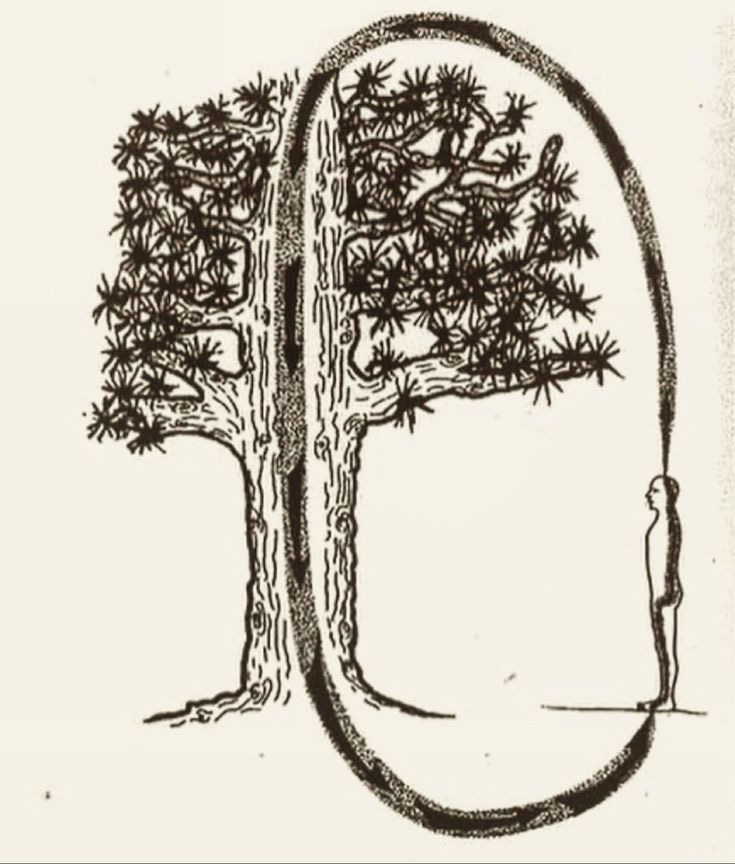
And the physiological effects of doing this was tangible.
That long-term student shared that his appetite diminished over time. The reasoning behind this is that, as you begin to draw energy from the environment, you rely less on the food you consume. As a result, your need for food decreases.
And again, this isn’t unique to qigong. You hear the same thing in yoga. Advanced pranayama practitioners often talk about the power of visualisation, sensitisation and with practice, needing less food.
3. Strength isn’t just Hardness
This one was interesting. We’re obsessed with “core strength.” and most of the time, we think that means bracing harder and chasing a six-pack.
But the core is not just muscle. In my view, it’s a pressure system. And if we think about it that way, “energetics” becomes a lot less mystical and a lot more like basic physics: pressure, flow, gradients.
To my grandmaster, the flow of energy works through yin and yang.
He described us as energy conductors, like a battery — you need both positive and negative for charge (or qi) to flow.
So when you meet force:
Hardness should be met with softness
Softness should be met with hardness
That’s how force is absorbed, redirected, and expressed efficiently.
If someone only focuses on developing a hard, braced core, they often lose suppleness and responsiveness. It becomes incomplete.
If you look at yoga masters too, from BKS Iyengar to Simon Borge Olivier, their body isn’t always rigid or hyper-defined. What stands out more is suppleness, coordination, and control.
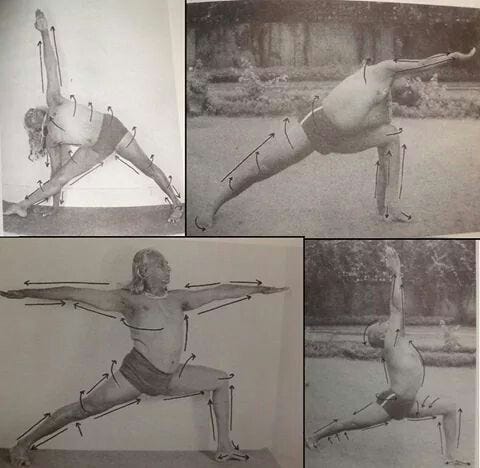
My grandmaster demonstrated this by using softness to deflect a powerful attack, and the effect was surprisingly strong. His point was clear: the body doesn’t always require maximal tension to remain stable. This idea directly connects to biomechanics:
Too much tension → rigidity → potential for breakage
Too much softness → collapse
What we truly need is modulation; a dynamic balance between tension and release. This principle shows up across multiple areas:
Breath regulation
Nervous system control
Movement efficiency
Stress response
True strength, or power, lies in our ability to adapt by adjusting, flowing, and responding effectively to whatever comes our way.
I’m still processing a lot of this. Some of it feels intuitive, while other parts I find myself questioning. What I do find fascinating is how much of it sits between subjective experience and measurable physiology which is exactly where most of yoga tends to live as well.
I’m also starting to dive deeper into comparing the Chinese elemental system with Samkhya and the chakra system. There’s a lot of overlap, but also some significant differences. It’s going to take me a while to fully unpack this and make a meaningful comparison.
On top of that, I’ve decided to enroll in a yoga therapy and ayurveda course starting next week, which means May will be a month of full-time study for me.
I hope you follow along on this journey.
Until next time,
Ruki